

The cool, wet, monsoon season is over and the El Niño heat is back in Singapore.
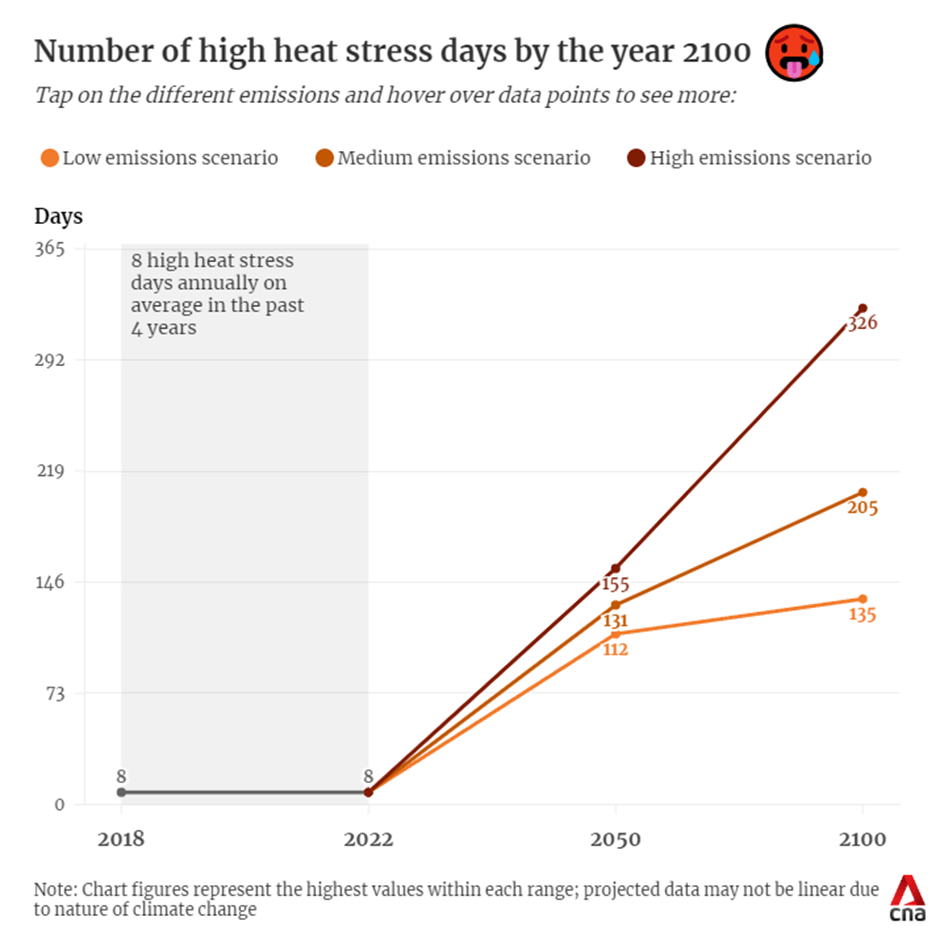
On the 5th of January, Channel News Asia published the following article: More days of extreme heat predicted in National Climate Change Study.
Based on the results of the National Climate Change Study, we have to anticipate more warm nights and more days with high heat stress. This is concerning because we won’t just be feeling uncomfortably warm – we have to anticipate a rise in Emergency department visits, and more complications from health issues due to heat stress.
So, what can we do about this?
Nationally, we have a lot of measures in place to combat Urban Heat Island Effect. The Ministry of Sustainability and Environment has the SG Green Plan 2030. There’s also the UHI Mitigation Roadmap which suggests solutions like increasing greenery provision in existing built-up areas, electrifying our vehicle fleet, and using more ‘cool materials’ on buildings.
And that’s exactly what we can do:
Jump on the bandwagon to assist with national efforts by providing and opting for cooling alternatives.
Cooling Singapore with Terra-Eco
When you implement a Tobermore pavement with Terra-Eco, you’re implementing a Green Pavement.
Here’s all the reasons why.
1. Cooler Surfaces with ‘Cool’ Designs
Many of Tobermore’s paving blocks have their Solar Reflectance Index assessed.
With these details, we can help you come up with a design that helps to keep surfaces and the surrounding air cool.
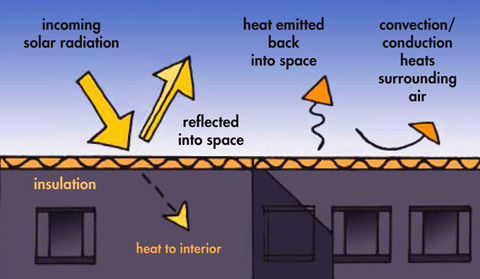
Solar Reflectance Index is a measure of the solar reflectance and emissivity of materials. It is used as an indicator of how hot a material is likely to become when solar radiation is incident on their surface.
The lower the SRI, the hotter a material is likely to become in the sunshine.
We at Terra-Eco can help you with designing a pavement to mitigate Urban Heat Island effect.
2. Implementing Evaporative Cooling for Cooler Surfaces
Tobermore’s Hydropave paving blocks are implemented in permeable paving systems to manage and prevent flooding.
On top of that, it also comes with the added benefit of cooling surfaces and the surrounding air through evaporative cooling.
Here’s how it works:
- Permeable paving systems hold moisture in its sub-base during a rain event, to lighten the load on storm drains.
- After a rain event, the trapped moisture absorbs heat, and transitions from a liquid to a gaseous state.
- In doing so, it takes the heat away from a pavement and the surrounding air, cooling the area.
3. Taking Advantage of Granite’s Poor Conductivity
Permeable pavements are cooler than standard concrete pavements because permeable pavements are laid on granite aggregate sub-bases, whilst standard concrete pavements are laid on a sand bed.
What difference is there between using sand and granite?
Sand is a good conductor of heat.
When sand is used between paving blocks and in a pavement’s sub-base, it absorbs heat quickly from heated pavers, but releases heat just as quickly back into the pavers and into the air surrounding the pavement.
Furthermore, because each grain of sand is so small, the total surface area in a sand mixture is greater, which increases the conduction of heat energy.
By comparison (in a study done by NASA), stone is a much poorer conductor of heat as compared to sand. In other words, it takes a long time to get warm, and takes even longer to release that heat back into the surrounding air.
Granite aggregate also has a smaller surface area than a sand mixture does, which lowers the overall conduction of heat energy.
4. Tobermore’s paving blocks are sustainably manufactured
All of Tobermore’s building materials are manufactured using:
- Renewable energy (on-site 250kW wind turbine and 1,250 solar panels),
- Zero waste (100% recycling of manufacturing residue, 100% recyclable packaging),
- Recycled Water (100% of water used in manufacturing process is recycled),
- Transport efficiency is maximised to ensure fuel efficiency, and
- All construction materials are responsibly sourced (BES 6001 accredited).
And, we have the EPDs to back up our claims.
Combating Urban Heat Island Effect is not difficult.
Are you ready to start implementing cool pavements?
Let us help you! Contact us today.
 Terra-Eco Pte. Ltd.